MIDI Chord Progressions – Editable Chord Packs and Harmony Tools
Explore MIDI Chord Progressions and Harmony Tools for songwriting, beatmaking and music production across multiple genres.
🎹 Find editable chord patterns for Pop, EDM, House, Jazz, Neo Soul, Lo-Fi, Ambient and cinematic compositions.
Discover musical ideas for:
Major and minor chord progressions
Jazz-influenced extended harmonies
Emotional and uplifting chord sequences
Rhythmic piano chords and synthesizer stabs
Creative songwriting and harmonic experimentation
Import MIDI chord files into your DAW, assign your preferred piano, synthesizer or virtual instrument, and customize notes, chord voicings, rhythm and tempo.
Whether you’re building a song around a chord sequence or exploring more complex harmony, Sonic Dock offers different MIDI chord collections to support your creative workflow.
Browse the chord progression packs below and find a musical starting point for your next composition.
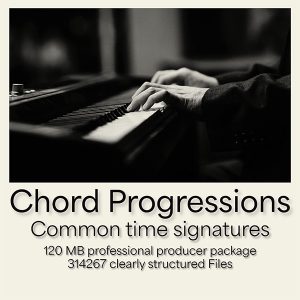
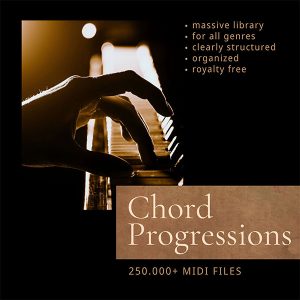
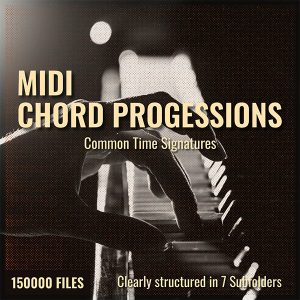
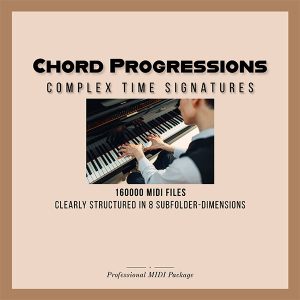
MIDI Chord Progressions for Songwriting and Music Production
Explore MIDI Chord Progressions for creating melodies, developing song structures and experimenting with musical harmony.
Chord progressions shape the emotional character of music. They provide a harmonic foundation for melodies, basslines and instrumental arrangements, whether you’re producing electronic tracks, writing piano-based songs or developing cinematic compositions.
Sonic Dock offers different MIDI chord collections and harmony tools for producers, songwriters and composers. Browse the available packs to find musical patterns suited to your preferred genre and workflow.
Explore Different Types of MIDI Chord Progressions
Major and Minor Chord Progressions
Major and minor harmonies provide the foundations of many musical styles.
Use editable MIDI chord patterns to experiment with uplifting, reflective, atmospheric or rhythm-focused arrangements.
Assign the notes to a virtual piano, synthesizer, guitar instrument or pad and explore how different sounds influence the character of the progression.
Jazz Chords and Extended Harmony
Jazz-influenced harmony often features extended chords, richer voicings and more varied harmonic movement.
Depending on the selected collection, you can explore musical ideas involving seventh chords, ninth chords and other extended harmonies.
These patterns can support Jazz, Neo Soul, Lo-Fi, Soulful House and related styles.
For additional jazz-oriented musical material, explore our Jazz MIDI Files Collection with 956 MIDI files covering chords, basslines, melodies, rhythmic patterns and other Jazz elements.
Emotional and Cinematic Chord Progressions
Chord progressions can establish atmosphere and support emotional development in instrumental music.
Experiment with sustained harmonies, changing chord voicings and different instrument layers to create tension, movement or resolution.
These techniques are useful for Ambient, cinematic music, atmospheric electronic productions and instrumental compositions.
Discover more atmospheric musical resources in our Cinematic and Ambient MIDI Packs.
Rhythmic Chords for Electronic Music
Electronic music frequently uses chords as rhythmic elements rather than sustained harmonies.
Short chord stabs, repeating keyboard patterns and syncopated notes can help develop the groove of a track.
Experiment with assigning MIDI chords to pluck synthesizers, electric pianos, organs and other electronic instruments.
You can also explore different rhythmic patterns by changing note positions and lengths inside your DAW.
MIDI Chord Packs for Different Music Genres
Pop and Songwriting
A chord progression can provide the harmonic foundation for a verse, chorus or instrumental section.
Start with a progression, experiment with a melody and develop the arrangement around your preferred instruments.
MIDI makes it possible to change the key or adjust individual chords as your song evolves.
House and Electronic Dance Music
House and EDM often use repeating chord patterns alongside rhythmic basslines and synthesizer melodies.
For warm, jazz-influenced harmonies, discover our Soulful House MIDI Pack.
This collection contains 129 MIDI files featuring jazzy chords, smooth basslines, expressive melodies and pads.
For a broader selection of electronic production styles, browse our House MIDI Packs.
Progressive House and Trance
Melodic electronic music often develops through evolving chord progressions and contrasting arrangement sections.
Our Progressive House MIDI Pack includes 276 MIDI files focused on chords, leads, arpeggios and melodic hooks.
Use these musical elements to experiment with emotional breakdowns, melodic arrangements and evolving synthesizer layers.
Lo-Fi, Neo Soul and Jazz
These styles often emphasize expressive chord voicings, relaxed rhythmic phrasing and harmonic color.
Explore how changing the voicing of a chord or moving individual notes can alter the character of a progression.
Assign MIDI chords to electric pianos, soft keyboards or suitable guitar instruments and experiment with rhythmic variations.
Edit Chord Progressions in Your DAW
Unlike audio chord loops, MIDI files contain musical note and performance information rather than recorded sounds.
This allows you to customize the underlying harmony.
You can:
Transpose chord progressions to another key
Change individual chord notes
Experiment with different inversions and voicings
Adjust note lengths, timing and velocity
Rework rhythmic chord patterns
Assign different virtual instruments
Build basslines or melodies around the harmony
For example, you can import a chord progression, assign it to a piano and experiment with different inversions.
You might then duplicate the MIDI part, change its rhythm and play it through a synthesizer to develop a contrasting musical layer.
Explore Harmony and Learn from MIDI
MIDI chord progressions can also help producers understand musical structures.
By opening a MIDI file in your DAW’s piano roll, you can examine the notes that form each chord and how the harmony changes over time.
Explore concepts such as chord inversions, voice leading, intervals and harmonic movement.
This can provide a practical way to experiment with music theory while developing your own compositions.
Compatible Music Production Software
Standard MIDI files can be imported into compatible DAWs, including:
FL Studio
Ableton Live
Logic Pro
Cubase
Studio One
Reaper
Assign the imported MIDI patterns to suitable virtual instruments or MIDI-compatible hardware.
MIDI files provide note information, not recorded piano sounds or synthesizer presets. Suitable instruments are required for playback.
Check individual product pages for their specific contents and any additional requirements.
How to Use MIDI Chord Progressions
Choose a MIDI chord pack suited to your musical style.
Import a chord progression into your DAW.
Assign your preferred piano, synthesizer or keyboard instrument.
Adjust notes, voicings, tempo and rhythmic timing.
Develop melodies, basslines and other arrangement elements around the harmony.
Discover More MIDI Resources at Sonic Dock
Chord progressions are one part of a musical arrangement.
For additional melodies, basslines and instrument patterns, explore our EDM and Festival MIDI Packs and Trance and Progressive MIDI Packs.
If you want to experiment with chord progressions before exploring a larger collection, visit our Free Music Production Downloads page for a free multi-genre chord progression pack.
You can also browse our complete MIDI Packs for Music Production library for additional genres and creative tools.
Find Your Next MIDI Chord Pack
Whether you’re writing melodic electronic music, experimenting with extended Jazz harmony or building an atmospheric composition, MIDI chord progressions provide editable harmonic foundations for your ideas.
Explore the chord progression and harmony collections above, choose a pack suited to your musical goals and develop the patterns using your preferred instruments.